
August 2018
I want to begin by sharing a bit of my story. For some of you, it may feel familiar. For others, I hope it offers some understanding. I hope this helps if you’re going through something similar.
My son, now eight years old, had been attending crèche since he was six months old. We moved to Ireland when he was two and a half, and he started going to crèche in Galway. At first, there didn’t seem to be anything unusual in his development. There was a slight delay in his language skills, but this was expected. Although he’d had a permanent English-speaking babysitter since he was six months old, we came from a Spanish-speaking country, and we all spoke Spanish at home.
The difficulties in crèche began about a year later. I noticed some minor delays, such as his pencil grip and drawing skills, but the crèche staff assured me that everything was fine. Around the same time, I also observed changes in his eating habits—he went from eating almost anything to insisting on plain food.
Things became more challenging when his behavior started causing problems for other kids and even the teachers. My son began biting classmates and teachers without any obvious reason and would laugh uncontrollably for minutes when told off. As a result, my little troublemaker was expelled from the crèche three times within six months.
You can imagine how frustrating this was as a parent—being at work and getting calls or emails asking you to pick up your three-year-old because “his behavior wasn’t tolerated at crèche”, these are literal words from the crèche manager.
There were serious conversations with the crèche manager and countless discussions with my son, but the issues persisted. When I look back, it is difficult for me to believe that he was treated this way, like a “little” teenager being reprimanded by the school principal for smoking in the toilets.
During this time, we were dealing with significant family problems at home. The atmosphere was tense and far from ideal for a child. I won’t go into details now, but at the time, I was certain that this situation was either causing or contributing to my son’s behavior.
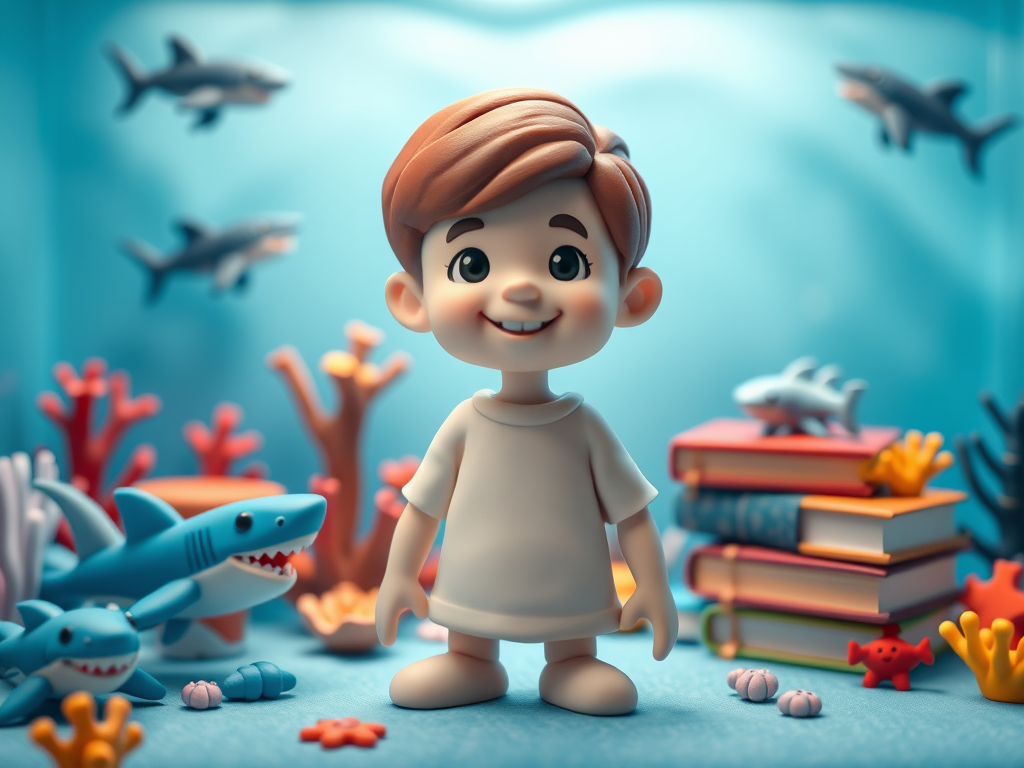
While all this was happening, my son developed an intense interest in sharks. It started, believe it or not, with the “Baby Shark” song. He had Baby Shark pajamas, a Baby Shark school bag (which played the soundtrack), a Baby Shark bath toy, and, of course, we watched the infamous YouTube song on repeat: Baby shark, doo doo doo doo doo doo…
His fascination quickly grew to include all kinds of sharks, with a special focus on the Great White Shark. He became completely obsessed with shark facts, drawings, coloring, and crafts—sharks became the central theme of his life. His knowledge was surprisingly advanced for a three-year-old. He’d confidently tell everyone, “A shark is gonna eat you,” and, to be honest, it was pretty adorable.
Looking back now, all these signs were screaming autism. No one noticed anything unusual. This occurred even when I raised concerns with the paediatrician. My family had mentioned that my son often flapped his hands when he was happily excited. Curious about it, I did some online research and came across something called stereotypes—repetitive movements or behaviours like hand flapping. However, my questions were ignored, and the flapping was dismissed as nothing to worry about.
I will be posting soon about…
Autism – why school matters
 Resilient Roots
Leave a comment